Difference between ASTM A276/A479 and AMS 5648
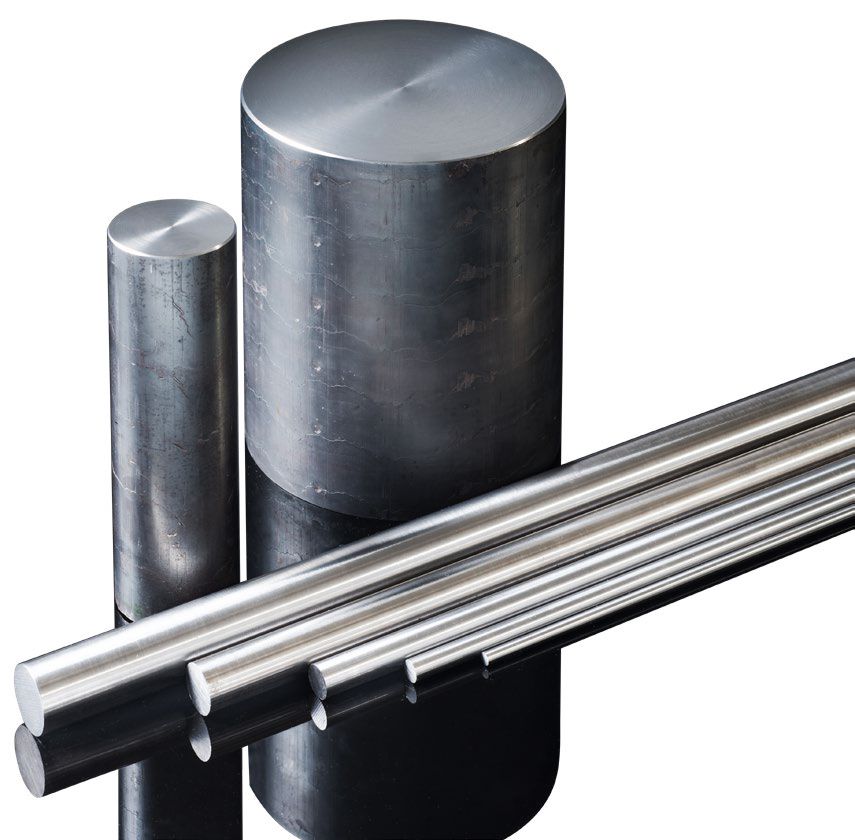
While both ASTM A276 and AMS 5648 govern stainless steel bars, the core difference lies in their intended application and the rigor of their requirements.
ASTM A276 is a general industrial standard, whereas AMS 5648 is an aerospace-grade specification. Think of it as the difference between a high-quality “daily driver” and a “specialized racing engine.”
1. Scope and Application
- ASTM A276: This is the “bread and butter” specification for stainless steel bars and shapes. It’s used in general construction, pump shafts, and common industrial hardware. It covers a wide variety of grades (304, 316, 410, etc.).
- AMS 5648: This is an Aerospace Material Specification. It is much more specific, focusing almost exclusively on 316 stainless steel (specifically 316L or 316 with controlled carbon) in the solution-treated condition. It is designed for parts that require high corrosion resistance and reliable performance in aircraft or high-stress environments.
2. Technical Comparison
While a piece of steel might meet both standards, AMS 5648 usually imposes stricter controls on how the material is processed and tested.
| Feature | ASTM A276 | AMS 5648 |
| Primary Grade | Multiple (300 & 400 series) | 316 / 316L |
| Industry | Commercial & General Industrial | Aerospace & Defense |
| Quality Control | Standard industrial testing | Higher scrutiny; often requires stricter melt practices |
| Macroetch Testing | Usually not required unless specified | Often required to ensure internal soundness |
| Traceability | Standard | High (stringent documentation for flight safety) |
3. Can they be "Dual-Certified"?
Yes, quite often. Because AMS 5648 is essentially a “stricter” version of the requirements for 316 stainless steel, a manufacturer can produce a bar that meets the chemical and physical properties of both.
However, you cannot simply “call” an ASTM A276 bar an AMS 5648 bar. To meet the AMS standard, the material must have been tested and documented according to the specific aerospace protocols (like grain size or macro etching) during production.
Which one do you need?
- Use ASTM A276 if you are building components for marine hardware, food processing, or general structural work. It’s more cost-effective and widely available.
- Use AMS 5648 if you are manufacturing components for the aerospace industry, defense contracts, or if your customer’s blueprint specifically mandates it for liability and safety reasons.
When you compare the chemical limits, you’ll find that AMS 5648 is essentially a specialized, “high-test” version of ASTM A276 Grade 316.
While their base chemistry is nearly identical, the differences are found in the fine print regarding impurities and mechanical performance.
1. Chemical Composition Comparison
Both standards target the same “recipe” for 316 stainless steel, but AMS 5648 often demands tighter control over secondary elements to ensure reliability in flight.
| Element | ASTM A276 (316) | AMS 5648 (316) |
| Carbon (C) | 0.08% max | 0.08% max |
| Chromium (Cr) | 16.0 – 18.0% | 16.0 – 18.0% |
| Nickel (Ni) | 10.0 – 14.0% | 10.0 – 14.0% |
| Molybdenum (Mo | 2.0 – 3.0% | 2.0 – 3.0% |
| Manganese (Mn) | 2.00% max | 2.00% max |
| Silicon (Si) | 1.00% max | 1.00% max |
| Phosphorus (P) | 0.045% max | 0.040% max (Often stricter) |
| Sulfur (S) | 0.030% max | 0.030% max |
Note: Many modern suppliers provide “Dual Certified” material that meets both 316 and 316L. AMS 5648 specifically targets the standard 316 chemistry, while its “sister” spec, AMS 5653, targets the low-carbon 316L.
2. Mechanical Requirements
The “Solution Treated” (annealed) state is mandatory for both, but the minimum strength thresholds are critical for aerospace engineering.
| Property | ASTM A276 (316) | AMS 5648 (316) |
| Tensile Strength | 75 ksi (515 MPa) min | 75 ksi (515 MPa) min |
| Yield Strength | 30 ksi (205 MPa) min | 30 ksi (205 MPa) min |
| Elongation (in 2″) | 40% min | 40% min |
| Hardness (Max) | 187 – 217 Brinell | 187 – 217 Brinell |
| Traceability | Standard | High (stringent documentation for flight safety) |
3. The "Invisible" Differences
If the numbers above look the same, you might wonder why AMS 5648 costs more. The difference is in the Testing and Processing:
- Macroetch Testing: AMS 5648 usually requires a macroetch test (ASTM E341/E381) to inspect for internal flaws, inclusions, or “segregation” in the metal. ASTM A276 rarely requires this unless the buyer adds it as a special supplement.
- Grain Size: AMS specifications often have more rigid requirements for grain size uniformity to ensure the metal reacts predictably during machining and under fatigue.
- Reporting: AMS 5648 requires a much more comprehensive Mill Test Report (MTR). It must detail the specific melt process (e.g., Electric Arc, Vacuum Degassed) and often requires more frequent sampling than general industrial lots.
Summary
If you are holding a piece of 316 bar, it likely meets the chemistry of both. However, it only “is” AMS 5648 if the mill performed the specific aerospace-grade validation tests during its manufacture.